Web3 and blockchain technology are redefining how businesses operate, build trust, and scale globally. Here's how to choose the right chain and harness infinite possibilities for growth.

As we witness the next wave of internet evolution, Web3 and blockchain technology are redefining how businesses operate, build trust, and scale globally. Whether you're running a supply chain company, a retail platform, a fintech startup, or a digital-asset services integrating blockchain into your traditional model isn't just an innovation — it's becoming a necessity to stay ahead.
But where should businesses start? And how can they harness the right blockchain infrastructure to unlock new growth? This blog articulates the infinite possibilities for traditional businesses to adopt blockchain and crypto.
Why Blockchain for Businesses?
Traditional systems still come with friction: intermediaries, delayed settlement, opaque record-keeping, and limited interoperability. Blockchain solutions offer:
- Transparency: All transactions are recorded immutably on a distributed ledger.
- Security: Cryptography ensures data integrity and tampering resistance.
- Efficiency: Smart Contracts automate business logic, reducing costs and errors.
- Trust-less System: Parties can interact without needing centralised oversight.
Web3 goes a step further — enabling decentralised applications (dApps), sovereign identity, community governance, and borderless finance. It isn't just technological, it's strategic.
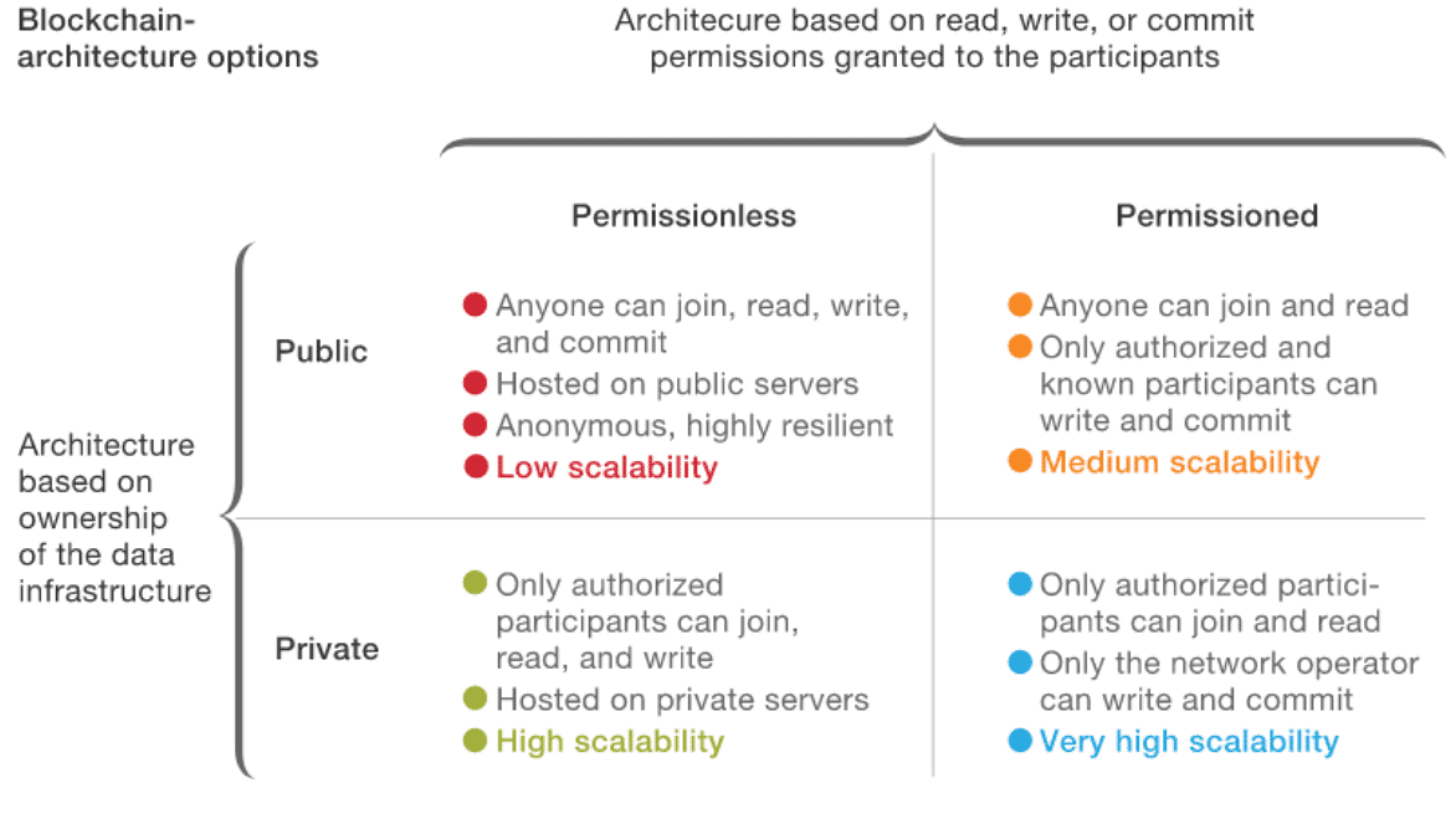
Blockchains for Businesses in 2025
Choosing the right blockchain can dramatically affect the outcome of your Web3 adoption journey. Here are some of the most business-friendly blockchains:
- Ethereum (Layer 1) — The most mature smart contract platform with deep liquidity and a rich ecosystem. Best for: Finance, Luxury Brands, Public Sector. Note: Comparatively slower and higher transaction fees.
- Polygon, Base, Arbitrum (Layer 2 / Ethereum-compatible) — High-speed, low-cost and EVM-compatible. Brands like Nike, Starbucks, Mattel, and Disney are already leveraging this ecosystem. Best for: Real-time payments, gaming, ticketing, and data-streaming applications.
- Solana / BNB Chain — Ultra-fast and low-fee, perfect for consumer-facing apps that need scalable, low-cost deployments. Best for: Web3 Commerce, digital wallets, scalable tokenised assets.
- Avalanche — Offers subnet architecture for custom, enterprise-level blockchains. Best for: Financial Applications, Institutional DeFi, and regulated environments.
- Hyperledger Fabric — A permissioned, modular blockchain framework ideal for enterprise use cases. Best for: Healthcare, supply chain, and confidential data-sharing between partners.
- Cardano / R3 Corda — Focused on security-first design and formal verification. Best for: Government, academia, and regulated financial services.
How Web3 Can Supercharge Your Business
Let's take a real-world lens and break it down:
- Smart Contracts for Automation: Use smart contracts to automate invoice settlements, royalty payments, subscriptions, or even employee bonuses. No intermediaries. No delays.
- Tokenised Equity & Crowdfunding: Instead of relying on traditional VC funding, businesses can raise capital by tokenising shares or creating utility tokens. Allows global participation and provides instant liquidity through secondary market trading.
- Transparent Supply Chains: Blockchains bring end-to-end visibility in logistics. Whether you're tracking coffee beans or auto parts, everyone from supplier to customer sees the truth.
- Community Driven Products: DAOs (Decentralised Autonomous Organisations) allow your community and customers to propose features, vote on decisions, funding allocations, or even product lines. Building with your users, not just for them.
- Borderless Payments & DeFi: Say goodbye to high cross-border fees. Crypto wallets and stable-coins let you pay suppliers or employees globally in seconds without bank or forex markups.
- Customer Loyalty Reimagined: Traditional point systems are siloed and prone to fraud. NFT-based loyalty programs can be interoperable, tradable, and programmable across platforms.
- Decentralised Marketplaces: Eliminate intermediaries by using smart contracts for escrow, ratings, and dispute resolution. Enable peer-to-peer commerce with lower fees and global access.

This is not an exhaustive list — businesses can leverage Web3 according to their own needs. Some more ways to supercharge your business are Digital Product Provenance & Authenticity, Decentralised Data Monetisation, IoT integrations, On-chain HR & Talent Management, Micro-transactions (usage-based billing), and much more.
Only limit is imagination.
Getting Started: Web3 for Traditional Businesses
Here's a simplified path:
- Define the problem: Is it payments, loyalty, transparency, or identity?
- Pick the chain: Start with low-fee chains like Polygon, Base, BNB, or Solana.
- Use Existing Tools: Leverage platforms like Moralis, Alchemy, and OpenZeppelin, while DeFi and DAO tools can be very helpful to set up quickly.
- Integrate Gradually: You don't need to decentralise everything on day one. Start with hybrid models.
- Educate Your Team: Web3 is a mindset shift. Invest in workshops, events, and partnerships.
A lot of traditional brands are already in the Web3 space exploring the future of commerce. The question is — will your business be next?
Final Thoughts
Blockchain and Web3 aren't just about crypto — they're about rebuilding digital infrastructure for trust, transparency, and programmable ownership.
Forward-thinking businesses who adopt it early can enjoy not just efficiency gains but entirely new markets and engagement models.
At CosX AI, we're helping bridge traditional businesses into the decentralised future — offering our expertise, experience, and insights to help you thrive in the Web3 world.
Want to explore how your business can go Web3? Get in touch with our team today.
Ready to Scale with AI?
Join forward-thinking teams already working with CosX AI. Tell us your challenge and we'll map the highest-value workflows to automate first.
Written by
CosX AI
Engineering
Published
April 1, 2025
Duration
9 min read
Share
Tags